Commercial Fire Damage Restoration
Commercial Fire Damage Restoration in Lubbock & Brownfield, TX
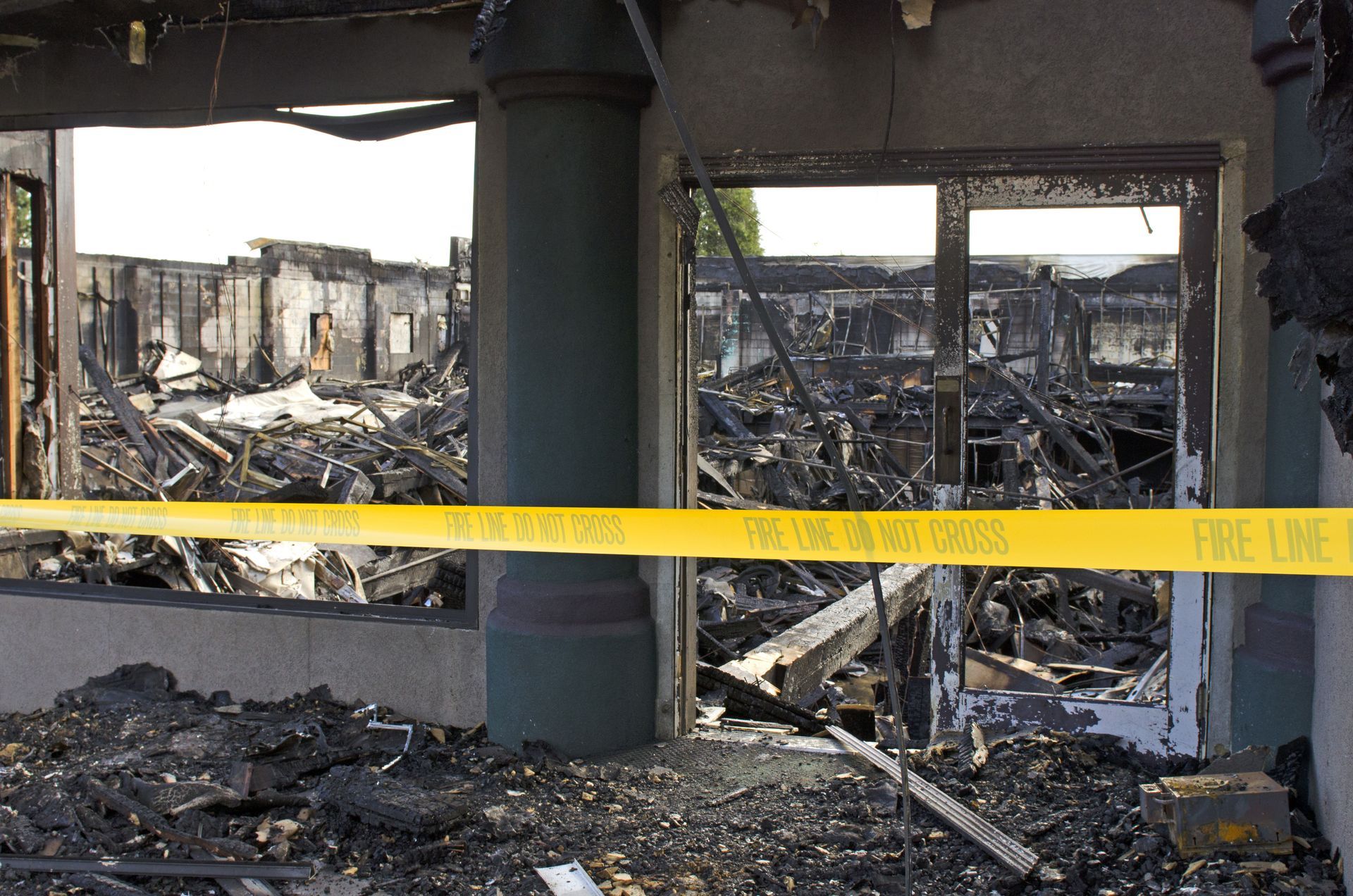
A commercial fire can affect much more than the area where flames were present. Smoke and soot can spread throughout a building, while water from firefighting efforts can create additional damage. Depending on the property, the loss may involve offices, retail space, equipment, inventory, ceilings, walls, flooring, HVAC systems, or structural components. Gold Standard Restoration provides commercial fire damage restoration in Lubbock and Brownfield to help businesses work through cleanup, mitigation, and rebuilding.
Stabilizing the Building
After a fire, securing the property is an early priority. Damaged doors, windows, roofing, and other openings can expose the building to weather and unauthorized access. Board-up and temporary protection can help stabilize the property while a detailed assessment is completed.
From there, restoration professionals need to distinguish between fire damage, smoke and soot damage, and water damage. Each can require a different approach. Soot residue can settle on surfaces throughout the building, while smoke odors may remain in porous materials and air-handling systems. Water can move into areas that weren’t directly affected by the fire.
Cleaning, Drying, and Rebuilding
Commercial fire restoration may include soot removal, HEPA air filtration, odor treatment, content cleaning, water extraction, drying, and dehumidification. Materials that cannot be restored may need to be removed before reconstruction begins. Salvageable contents and building components can be evaluated as part of the overall process.
The final stage can range from relatively small repairs to substantial reconstruction. Gold Standard Restoration’s current fire restoration process includes emergency board-up, smoke and soot removal, odor treatment, water mitigation, and structural repair or reconstruction. Its site also states that the company works with insurance adjusters and provides photo documentation and itemized estimates.
For a business owner or property manager, the restoration process also has an operational side. Keeping communication clear, documenting the condition of the property, and establishing what needs immediate attention can help reduce confusion while the building is being restored. The work has to account for the building and the business that depends on it.